





Historical development of metric units used in agriculture around the world
Agriculture are among the oldest human activities. Even the earliest peasants must have known how much land they were cultivating and what kind of harvest they could expect. But while today the farmer in the tractor cab watches a digital display, in the past the measure was subjective. Culture- or region-dependent units were used for measurement, but this was no longer sufficient with the rise of world trade. The chaos of the measurements was only stopped by the emergence of of the international metric system (SI).
Article content
In the past - the harvest was calculated on quantity of bags from an unspecified part of the field.
Currently - agronomist working with the unit t/ha (tonnes per hectare). If a wheat field with an area of 50 hectares reaches an average yield 6 t/ha, the agronomist knows that in the granary he must store 300 tonnes Grains.
The first measurement systems
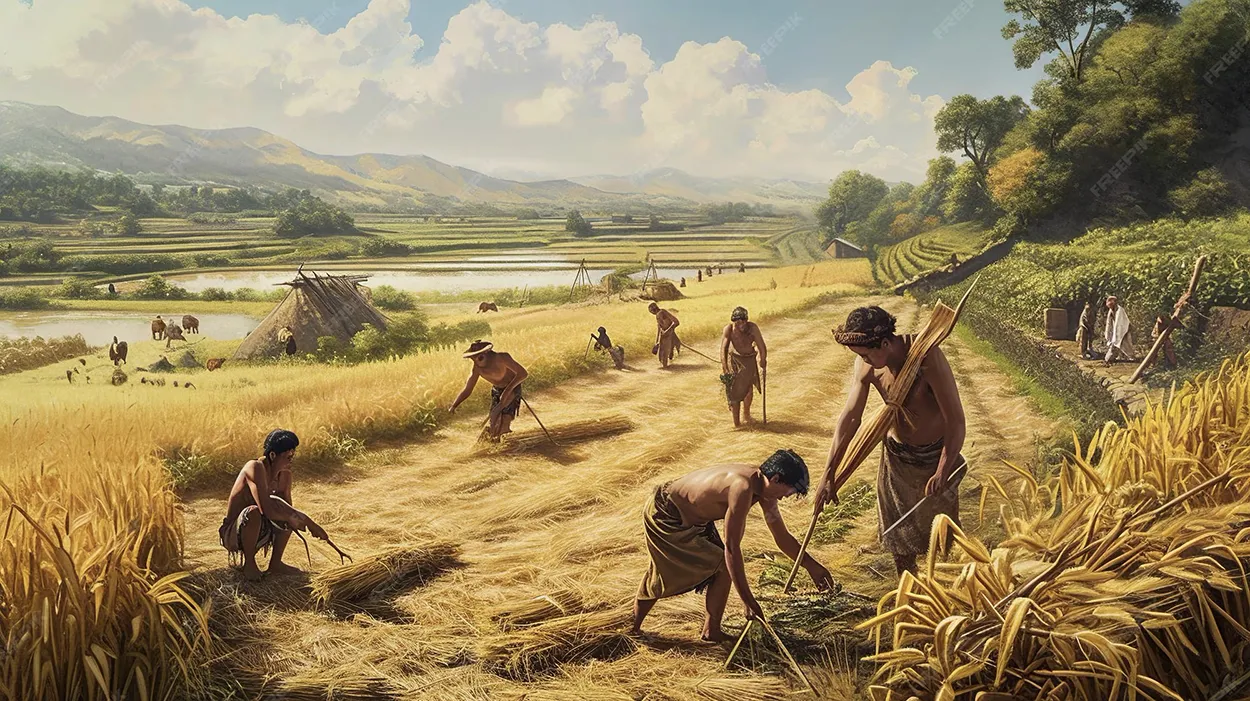
The oldest known measurement systems originated in the 4th-3rd millennium BC in the ancient Egypt, Mesopotamia, the Indus Valley and probably also in Elame (Iran). People used body parts such as their forearm, hand or finger to measure longitude and time by the movement of the sun, moon and stars.
Anatomy as the first meter
The oldest units of length measurement used in India include Egyptian elbow, dhanus (bow), krosa (cry) or yojana (stage).
Ordinary elbow was determined as the distance from the elbow to the tip of the middle finger and was divided into smaller parts - a palm, a finger or half an elbow. For the farmer, it was a practical aid in the home production of sacks or baskets for crops.
Royal Elbow was longer and represented the state norm. It was used in the construction of buildings and monuments in Egypt.
Roman footprint was divided into 12-16 fingers, with Roman mile had 1000 steps. Thanks to this unit, the farmer knew exactly how far he had to travel to get to the market.
Yard was divided into smaller parts and its origin was probably related to the elbow or measure of the king. Sticks, poles and perches came to be used for measuring, allowing farmers to accurately determine the boundaries of their land.
From grains to tons
The oldest unit was grain (grain). It was a real grain of wheat or barley, which, because of its constant weight, was an ideal measure for precious goods - gold, silver. From this unit, larger measures gradually evolved.
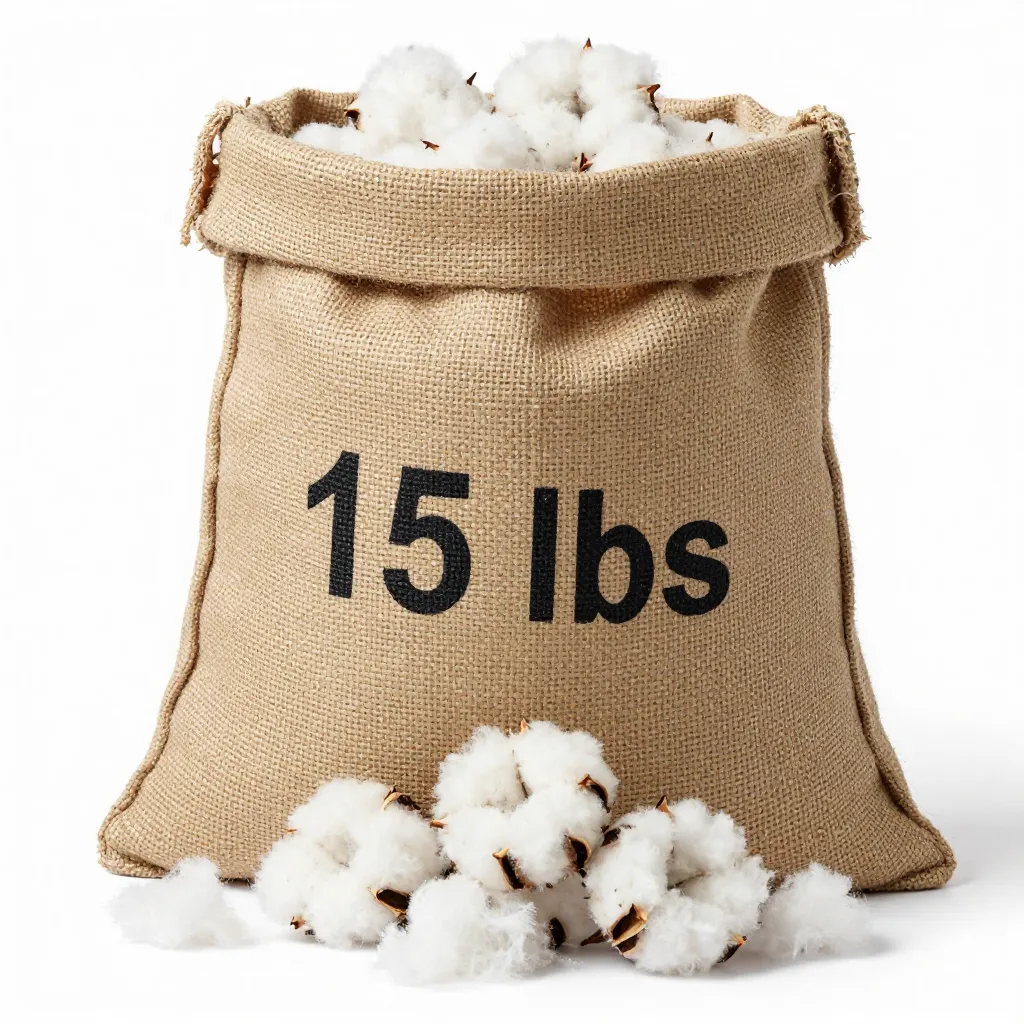
Pound - a small unit of weight, about 0.3-0.5 kg. The farmer used it to measure the grain, cheese or eggs he sold at the market.
Shekel - small weight of silver about 11-14 g, it was also used as payment. The farmer used it to pay rent, taxes or to buy seeds and tools.
Talent - large unit, about 30-40 kg. The farmer could imagine it as supplies for the whole winter or a big tax for the king.
In Britain, larger units were used, such as a stone, a quarter, a hundred and a ton.
Stone - about 6.35 kg. The farmer weighed, for example, sheep or small sacks of grain and knew how many „stones“ to load on the wagon.
The Quarter - 4 stones, about 25 kg. Thanks to this, the farmer knew that he could carry the load with the help of a cart or a few people.
One Hundred - 100 pounds, approximately 45 kg. The farmer knew that one such package represented the cargo carried by a wagon or ship.
Tona - about 1 016 kg, i.e. about 40 quarters. It was used for long-term supplies or large supplies for the city or merchants.
Mathematics of fields
Before the introduction of the metric system, the area of fields was measured according to the work of animals.
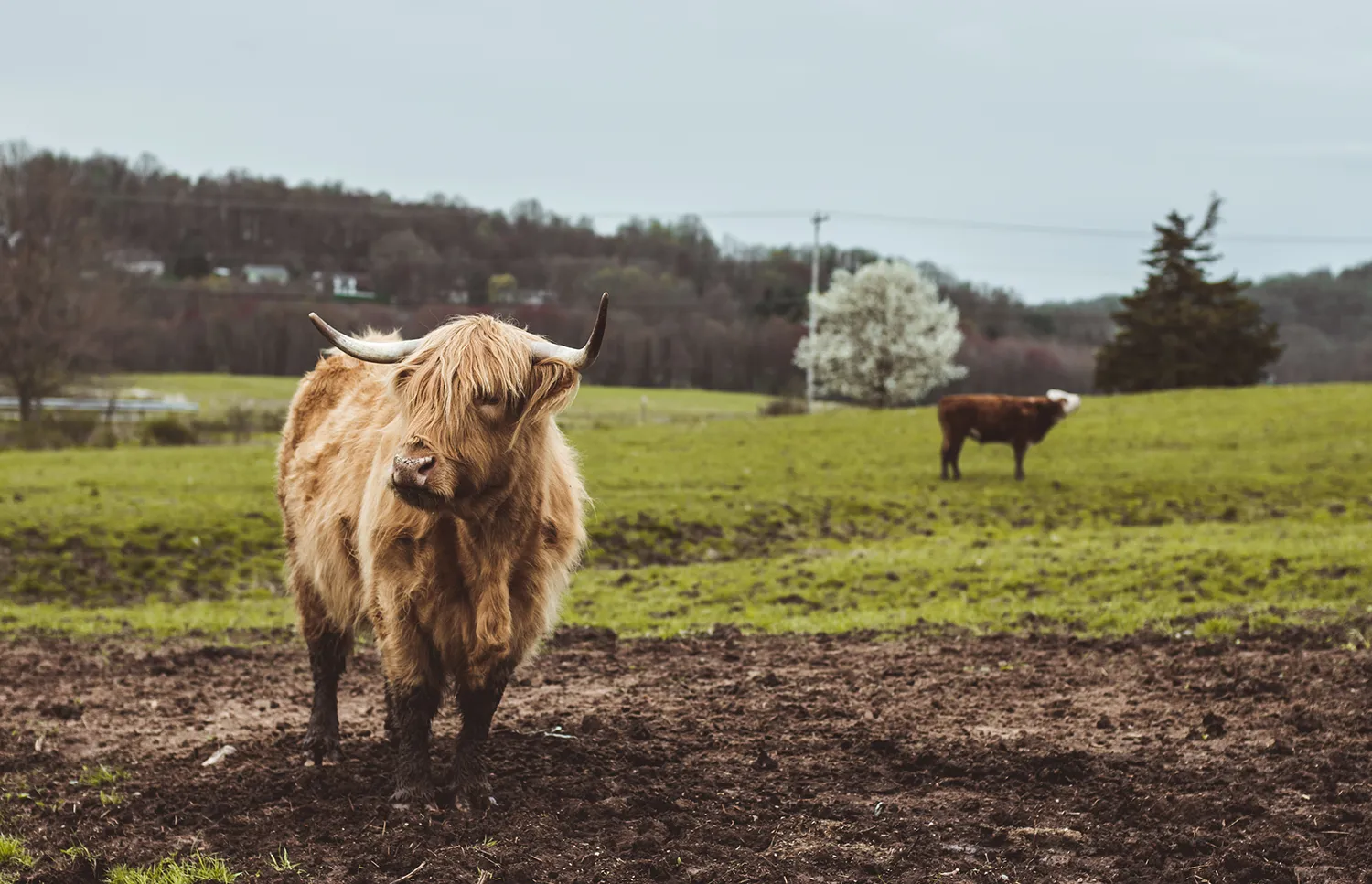
In France was used arpent - approximately 0.4-0.5 hectares. The farmer knew that an arpent was an area that could be worked by a couple of oxen in a day. V Canada (especially in Québec) the arpent used until the 20th century.
V Germany and Austria-Hungary (including Slovakia) dominated morga. One morga had around 0.25-0.36 hectares. It was „in the morning.“ - the area that a pair of horses or oxen could plough in one morning's work.
At Slovakia and the Czech Republic was also used lan or rope - a large unit of about 18-24 hectares, often associated with serf farms. Smaller fields were measured in tomorrow (similar to morga) or in corcoch.
V China dominated mǔ - approximately 666.7 m² (0.0667 ha). The farmer knew that one mǔ is the area that can be worked by one person in a day.
V India was used bigha - value varied by region (from 0.25 to 0.6 ha). The farmer calculated according to sowing or tax - for example „a fifth of a bigha“ was a small field for vegetables.
V Japan farmers to this day talk about chō - approximately 0.9917 ha (almost 1 ha). The smaller field was measured in tan ( 0,099 ha) or tsubo (about 3.3 m²). These units are mainly used in sale of land or in traditional economy.
When sowing determined the dimension of the land
The harvest was often measured by Sowing. V medieval England the farmer counted the field by how much seed he needed - for example, a bushel was the volume of grain to sow an acre.
In the old Rome was used modius (about 8.7 litres) per grain. The farmer knew that one field required a certain number of modiov seeds and expected 5-10 times yield.
V 19th century has been switched in many countries to hectolitres per hectare (hl/ha). For example, wheat yielded 20-30 hl/ha. This made it possible to compare farms in different regions.
Today is standard t/ha (tonnes per hectare) because weight is more accurate than volume - grain has different moisture content and density.
Overview of historical and modern units of measurement
| Category | Unit | Definition / size | Use |
|---|---|---|---|
| Length | Ordinary elbow | Distance from elbow to tip of middle finger | Measurement of bags, baskets, plot boundaries |
| Length | Royal Elbow | Longer than normal elbow (state standard) | Construction of buildings, monuments, field boundaries |
| Length | Roman footprint | 12-16 fingers | Distance to market, miles |
| Length | Yard | Hanging with the elbow/royal measure | Measurement of land boundaries |
| Length | Dhanus, Krosa, Yojana | Long distance units | Longer distances |
| Area | Hectare (ha) | 10 000 m² | Yields, area of fields |
| Area | Acre (acre) | ~0.4047 ha | Traditional land area |
| Weight | Grain | Weight of grain | Weight of precious metals, grain |
| Weight | Pound | ~0,3-0,5 kg | Market measurements |
| Weight | Shekel | ~11-14 g | Payments, taxes |
| Weight | Talent | ~30-40 kg | Large stocks |
| Weight | Stone | ~6,35 kg | Weight of sheep |
| Weight | Quarter (quarter) | ~25 kg | Load on trolley |
| Weight | One Hundred | ~45 kg | Packing for transport |
| Weight | Tona | ~1 016 kg | Large deliveries |
The road to uniform measurement
In the 17th-18th centuries, scientists proposed uniform systems of measurement based on the decimal system. Gabriel Mouton in 1670 came up with the proposal of the „virga“ unit of length and a series of prefixes similar to today's SI. Later in 1790 Thomas Jefferson proposed to the United States to introduce a decimal system of weights and measures, but this proposal did not take off.
When chaos became measurable
Metric system was born at the end of the 18th century during the French Revolution. Its goal? To get uniform method of measurement, that would make sense to anyone. Basic units, meter, letter, kilogram were based on nature itself - pnatural properties of the Earth and water. They have made measurement simple and practical in everyday life.
The essence of functioning
The metric system uses the uniform decimal principle. Prefixes such as kilo- or milli- denote multiples and fractions of units, making it easier to calculate and compare values, for example when measuring land or crops.
Metric vs. Imperial system
Imperial rates emanate from body parts or common objects. This system is still used by 3 countries - USA, Liberia and Myanmar, but in practice, this system often overlaps with the metric system.
United States
United States they are a country that still uses imperial measures. What does this mean in practice? Distances are commonly measured in miles and fuel in gallons. However, scientists often work in metric units. For farmers, this means that when calculating hectares of land or tonnes of crops, they have to recalculate the values to bring their results up to international standards.
Myanmar and Liberia
Myanmar and Liberia are currently the only countries that have not yet officially adopted metric measurement. Nevertheless, metric measures are commonly used here. For example, farmers calculate harvests in kilograms or field areas in hectares, although older measuring instruments still show local values.
Metric vs. Imperial system
Imperial rates emanate from body parts or common objects. This system is still used by 3 countries - USA, Liberia and Myanmar, but in practice, this system often overlaps with the metric system.
United States
United States they are a country that still uses imperial measures. What does this mean in practice? Distances are commonly measured in miles and fuel in gallons. However, scientists often work in metric units. For farmers, this means that when calculating hectares of land or tonnes of crops, they have to recalculate the values to bring their results up to international standards.
Myanmar and Liberia
Myanmar and Liberia are currently the only countries that have not yet officially adopted metric measurement. Nevertheless, metric measures are commonly used here. For example, farmers calculate harvests in kilograms or field areas in hectares, although older measuring instruments still show local values.
United Kingdom
United Kingdom is located between two worlds. It is originally an imperial system country, but metric measurement is partially established here. In everyday life, people still use miles to gallons, pounds or stones. Recipes use cups and tablespoons, and baking is done according to the Fahrenheit scale. For farmers, this may mean that they have to combine the two systems to fertilise or calculate yields.
Unification of the world
After World War II the metric system spread rapidly. Most European countries introduced it in 19th-20th centuries.(France 1795, Germany 1872, Austria-Hungary 1876).
V 1960sand were followed by Australia, New Zealand and Canada - Farmers have gone from acres to hectares and from pounds to kilograms.
From 50's Printed by UNITED NATIONS on Africa and Asia. Uniform rates have opened the door to smoother trade with grain, fertilizers and agricultural machinery.
Today t/ha used almost everywhere. The only exception is USA, that still prefer bushel/acre (1 acre ≈ 0.4047 ha, 1 bushel of wheat ≈ 27.2 kg).
Philosophy of measurement in modern agriculture
Nor a new era of unified measurement has not eliminated all misunderstandings. Just pronounce „tone“ and the numbers are all over the map. 1000 kg in the metric world, 907 kg in the US, 1016 kg in the UK. At export so seemingly small differences turn into costly mistakes.
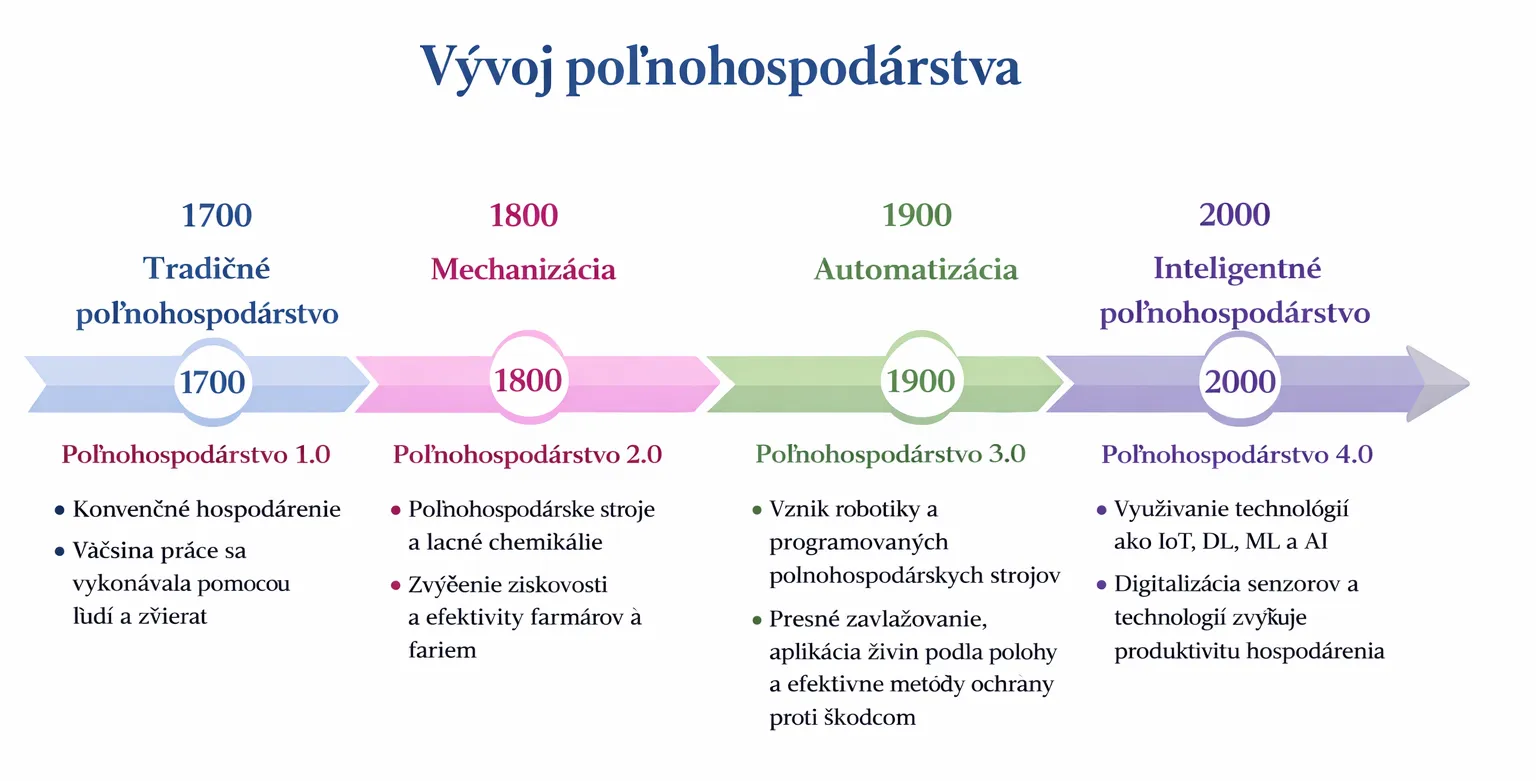
Today metric system (SI) dominates modern agriculture thanks to technology.
Digital technologies (GPS, drones, satellites) allow precise mapping in hectares and Returns in t/ha in real time. The farmer sees the soil variability on the tablet and optimises fertilisation.
In a precision economy, the Yield counts in t/ha to the nearest tenth. The GPS tractor applies fertiliser only where it is needed, saving 10-20 % cost.
„Fun facts” at the end
- The oldest surviving „measuring tool“ is an Egyptian wooden elbow from around 2650 BC. It was exactly 52.3 cm long and was found in the tomb of the architect who built the pyramids.
- The unit „grain“ (0.0648 g) is still used today in armoury and jewellery and is still based on the weight of a single grain of barley.
- Thanks to the metric system, around 2.8 billion tonnes of grain are now traded globally each year.